
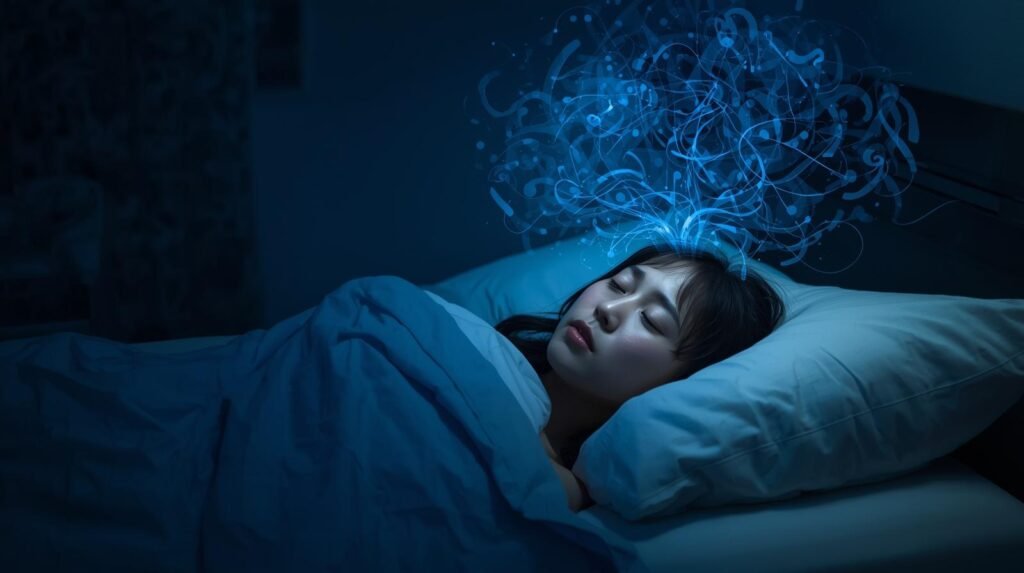
For many people, the moment they lie down in bed is when their mind becomes the loudest. Thoughts race, worries grow, and relaxation feels impossible. This nighttime mental overload is one of the most common triggers of Insomnia and one of the most exhausting patterns to break.
If your body feels tired but your mind refuses to slow down, you are not alone — and there is a real physiological explanation for what is happening.
Why Anxiety Gets Worse at Night
During the day, your brain is busy with tasks, conversations, and responsibilities. Distractions keep anxious thoughts partially suppressed. At night, when everything becomes quiet, those same thoughts suddenly gain full attention.
Several factors contribute to nighttime anxiety:
- Mental overload accumulated throughout the day
- Unresolved worries and unfinished tasks
- Fear of not sleeping, which increases pressure
- Elevated stress hormones late in the evening
- Lack of emotional decompression before bed
This combination keeps the nervous system in a state of alert, the exact opposite of what the body needs to enter sleep.
The Direct Link Between Anxiety and Insomnia
Anxiety and insomnia are tightly connected in a self-reinforcing loop:
- Anxiety triggers difficulty falling asleep
- Poor sleep increases emotional sensitivity
- Emotional sensitivity intensifies anxiety
- Insomnia becomes chronic
Over time, the brain begins to associate the bed itself with stress rather than rest. This conditioning makes falling asleep feel harder each night, even when you are physically exhausted.
How Anxiety-Driven Insomnia Affects the Brain
When anxiety and insomnia persist together, the brain remains overstimulated for extended periods. This can lead to:
- Reduced emotional regulation
- Increased negative thinking patterns
- Lower stress tolerance
- Memory and focus difficulties
- Daytime fatigue and irritability
- Higher risk of burnout
Sleep is when the brain reorganizes emotional experiences and resets stress responses. Without it, anxiety tends to intensify instead of dissolve.
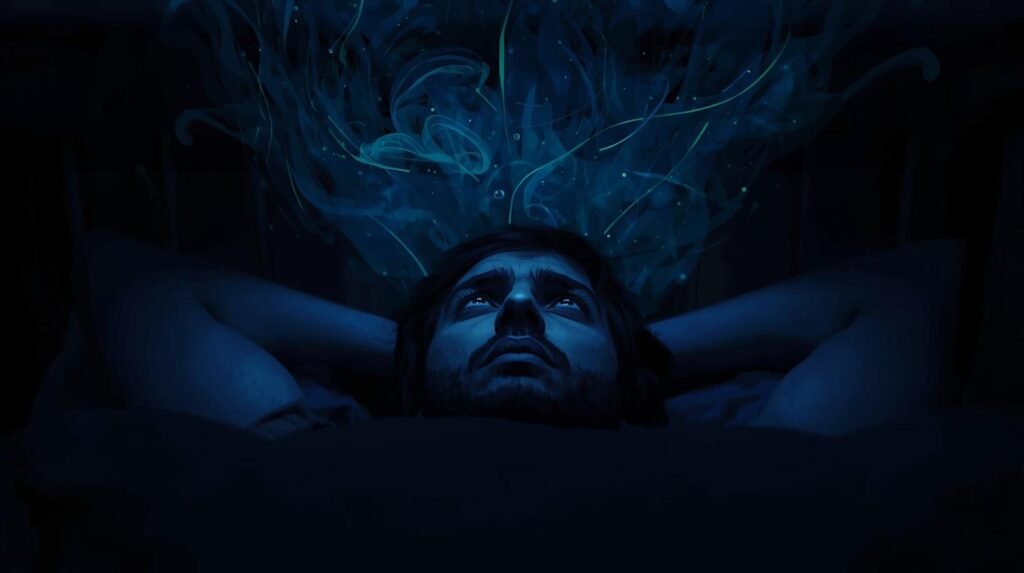
Common Nighttime Thought Patterns That Fuel Insomnia
People with anxiety-driven insomnia often experience repetitive mental loops such as:
- “What if I don’t sleep tonight?”
- “I have too much to do tomorrow.”
- “Why can’t I turn my mind off like other people?”
- “If I don’t sleep, tomorrow will be a disaster.”
These thoughts activate the body’s stress response, raising heart rate, muscle tension, and cortisol levels — all of which block sleep.
Natural Ways to Calm Anxiety at Night and Reduce Insomnia
The goal is not to “force” sleep, but to lower nervous system arousal so sleep can happen naturally.
1. Create a Mental Shutdown Routine
A simple pre-bed ritual trains the mind to transition out of problem-solving mode. This may include reading, gentle stretching, breathing exercises, or prayer.
2. Release Thoughts Before Bed
Writing worries, responsibilities, or emotions in a notebook before bed prevents them from circulating endlessly in your mind.
3. Slow the Body to Slow the Mind
The nervous system calms through the body first. Deep breathing, warm showers, and relaxation techniques send safety signals to the brain.
4. Reduce Stimulation in the Evening
Bright screens, intense news, and demanding conversations late at night amplify anxiety and worsen insomnia.
5. Practice Present-Moment Awareness
Meditation and body awareness shift attention away from imagined futures and back into the present moment, where sleep can occur.
Why Forcing Sleep Makes Insomnia Worse
One of the most frustrating aspects of insomnia is the harder you try to sleep, the more awake you become. Sleep is not an act of effort — it is a state of surrender.
Letting go of control, pressure, and expectations is often the turning point where natural sleep begins to return.
When Night Anxiety Becomes Chronic
When nighttime anxiety continues for months, the nervous system may remain locked in a prolonged stress response. At this stage, insomnia is no longer just about worry — it involves nervous system dysregulation, emotional overload, and mental exhaustion.
The earlier this pattern is addressed, the faster the recovery process becomes.
Final Thoughts: Calm the Mind, and Sleep Will Follow
Anxiety at night does not mean you are weak or broken. It means your nervous system is overloaded and asking for relief. Insomnia is not the enemy — it is a signal that your mind and body need calmer rhythms, emotional processing, and gentler transitions into rest.
When anxiety softens, sleep naturally returns.
And with proper rest, the mind becomes stronger, clearer, and more resilient.