
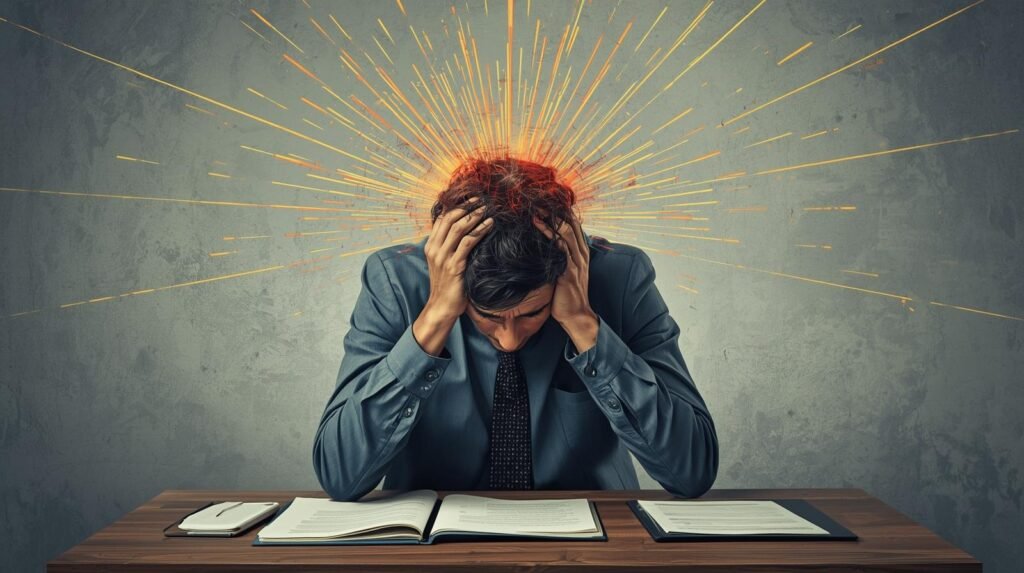
Burnout is more than just feeling tired. It is a state of physical, mental, and emotional exhaustion caused by prolonged stress. One of the most common and damaging consequences of burnout is Insomnia. When the body is pushed beyond its limits for too long, sleep is often the first system to collapse.
If you feel exhausted but still cannot sleep deeply, your body may not be failing — it may be overwhelmed.
What Is Burnout?
Burnout develops when stress becomes constant and recovery becomes insufficient. It is not caused by a single difficult week, but by months or years of pressure without proper rest.
Burnout is commonly driven by:
- Chronic work overload
- Emotional pressure and responsibility
- Lack of boundaries
- Perfectionism
- Financial stress
- Relationship demands
- Suppressed emotional needs
Over time, the nervous system becomes overloaded and loses its ability to shift into true rest.
The Direct Link Between Burnout and Insomnia
Burnout and insomnia are tightly connected. When burnout is present:
- Cortisol remains elevated at night
- The nervous system stays in alert mode
- The mind cannot disengage from problems
- The body loses its natural sleep rhythm
- Emotional exhaustion increases nighttime anxiety
Even when exhaustion is extreme, the brain may not allow deep sleep because it does not feel “safe enough” to shut down.
This leads to a painful paradox:
The more burned out you become, the harder it is to sleep.

How Insomnia Deepens Burnout
Just as burnout creates insomnia, insomnia also intensifies burnout. Without deep sleep:
- The brain cannot reset stress responses
- Emotional resilience drops sharply
- Physical energy continues to decline
- Motivation decreases
- Cognitive performance suffers
- The feeling of “being overwhelmed” grows
This creates a destructive loop where burnout and insomnia continuously feed each other.
The Nervous System Collapse Behind Burnout-Driven Insomnia
At the core of burnout-related insomnia is a nervous system that has lost its natural rhythm between activation and recovery. Instead of moving between effort and rest, it becomes trapped in constant activation.
This leads to:
- Hypervigilance
- Shallow breathing
- Muscle tension
- Racing thoughts
- Emotional numbness or overload
Sleep requires the opposite state: safety, softness, and surrender.
Key Signs That Insomnia Is Burnout-Driven
Your insomnia may be strongly linked to burnout if you experience:
- Chronic fatigue with poor sleep quality
- Mental exhaustion but nighttime alertness
- Emotional numbness or irritability
- Loss of motivation and joy
- Feeling disconnected from your body
- Dread of daily responsibilities
- A sense that rest never feels “enough”
In these cases, insomnia is not a simple sleep problem — it is a system-wide exhaustion signal.
Burnout Recovery as the Foundation of Insomnia Healing
When insomnia is rooted in burnout, sleep will not fully recover until burnout itself is addressed. Recovery is not about “doing more” — it is about removing what is draining you.
Burnout recovery focuses on:
- Restoring nervous system regulation
- Reducing chronic pressure
- Rebuilding emotional capacity
- Re-establishing natural life rhythms
- Learning to rest without guilt
As burnout softens, the body gradually relearns how to sleep.
Gentle Strategies That Support Burnout Recovery and Sleep
1. Redefining Rest
True rest is not only sleep. It includes mental rest, emotional rest, social rest, and sensory calm. Without these forms of rest, insomnia persists.
2. Setting Non-Negotiable Recovery Time
Daily recovery time is essential for nervous system repair. Even 20 to 30 minutes of true disengagement each day can slowly reverse burnout-driven insomnia.
3. Reducing Internal Pressure
Perfectionism and self-demand often fuel burnout. Softening internal expectations is one of the most powerful steps toward restoring sleep.
4. Rebuilding Safety in the Body
Relaxation, meditation, breathwork, grounding, and slow movement help the body remember that it is no longer under threat.
Why Burnout Recovery Takes Time
Burnout is not created in a week — and it is not healed in a week. The nervous system needs time to re-learn safety, trust, and regulation.
Sleep often returns gradually, not suddenly:
- Nights become slightly calmer
- The body relaxes faster
- Awakenings become less intense
- Mornings feel less heavy
These are early signs that recovery is happening.
Burnout, Identity, and the Fear of Rest
Many people with burnout struggle to rest because their identity has become tied to productivity. Rest can feel unsafe, unfamiliar, or even threatening.
True burnout recovery, and true insomnia healing, often require a shift in identity:
From:
- “I am valuable when I produce”
To: - “I am valuable because I exist”
When this shift happens, the nervous system finally allows deep sleep again.
Final Thoughts: Burnout Is Not Weakness — and Insomnia Is Not Failure
Burnout is not a moral flaw. Insomnia is not a personal failure. Both are signs that your system has carried too much for too long without enough recovery.
When burnout begins to heal, sleep does not need to be forced — it returns as a biological response to safety, softness, and rhythm.
Rest is not something you earn.
It is something your body needs in order to survive and thrive.
And when true rest returns, insomnia loses its power.